TINLINE Development
Awards
2026
Te Kāhui Whaihanga New Zealand Institute of Architects Nelson Marlborough Award; Commercial 2026
New Zealand Commercial Project Awards 2026, Gold Award Winner
2026 Property Council, Merit Award - Commercial Property
Publications
2026
“Hybrid timber construction brings low-carbon commercial development to a constrained urban site“, Archello, www.archello.com, 31.6.2026
Tinline Development, Archello, www.archello.com, 22.4.2026
Chris Barton, “Structural Timber and the Small City”, Architecture Now, www.architecturenow.co.nz, 29.4.2026
Chris Barton, ‘Structural Timber and the Small City’, Architecture New Zealand, March/April 2026, pg 66-72
“Nelson’s Three-Storey Office Brace Turns From Steel to Timber as It Rises”, Wood Central, www.woodcental.com.au, Australia, 29.4.2026
“Winners revealed: Nelson and Marlborough Architecture Awards 2026”, Architecture Now, www.architecture now.co.nz, 13.5.2026
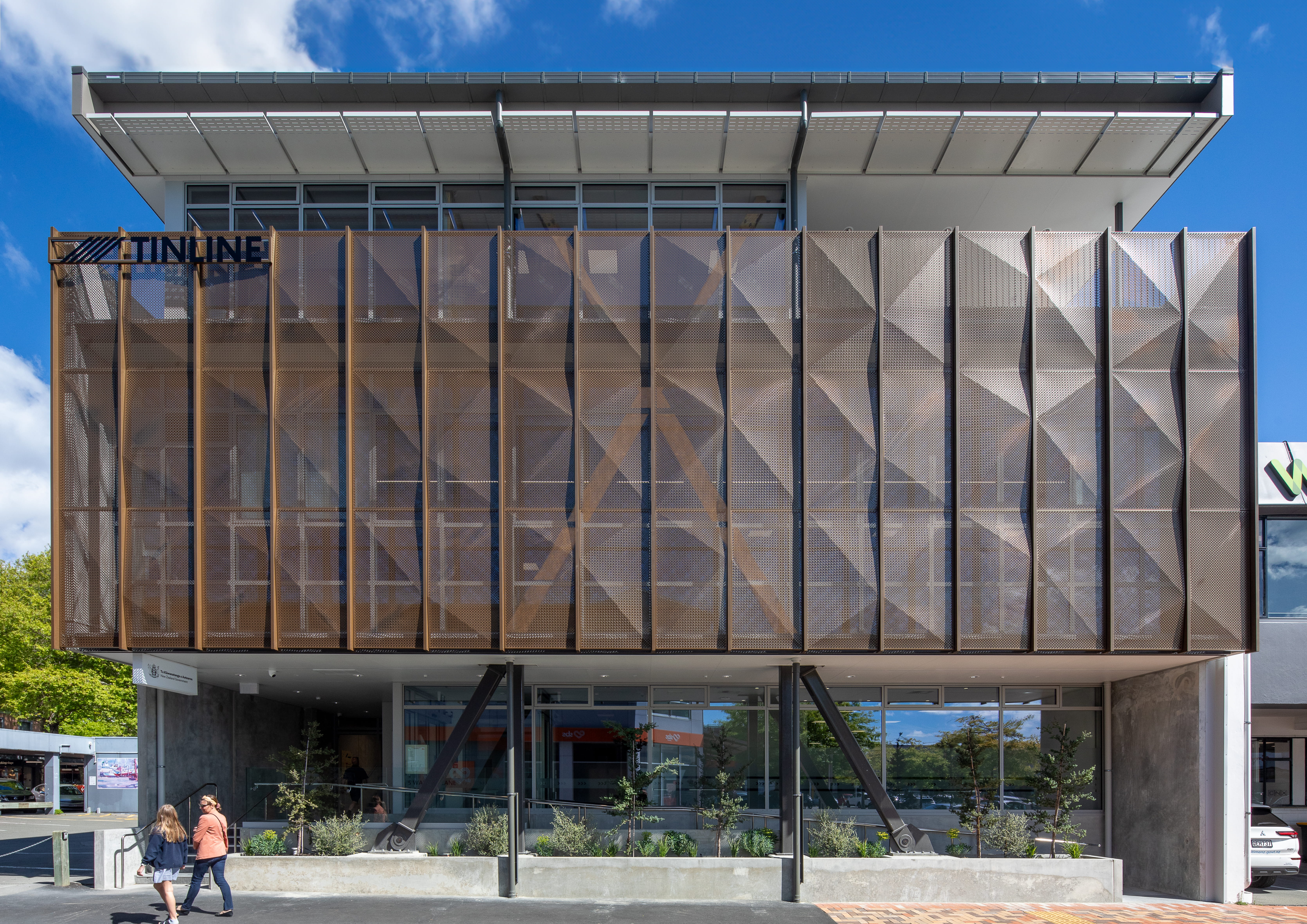
Go looking for structural timber buildings in the city and, inevitably, you arrive at a campus or large city site. Fire rating presents a limitation to timber buildings on small city sites; timber requires fire rated claddings and therefore separation from neighbours to enable access for the claddings to be maintained.
At a time when the climate emergency demands carbon responsible methodologies, this requirement for campus or large city sites prompts structural timber buildings increasing in size, complexity, and budget at the risk of exclusivity (Ball-dresses?).
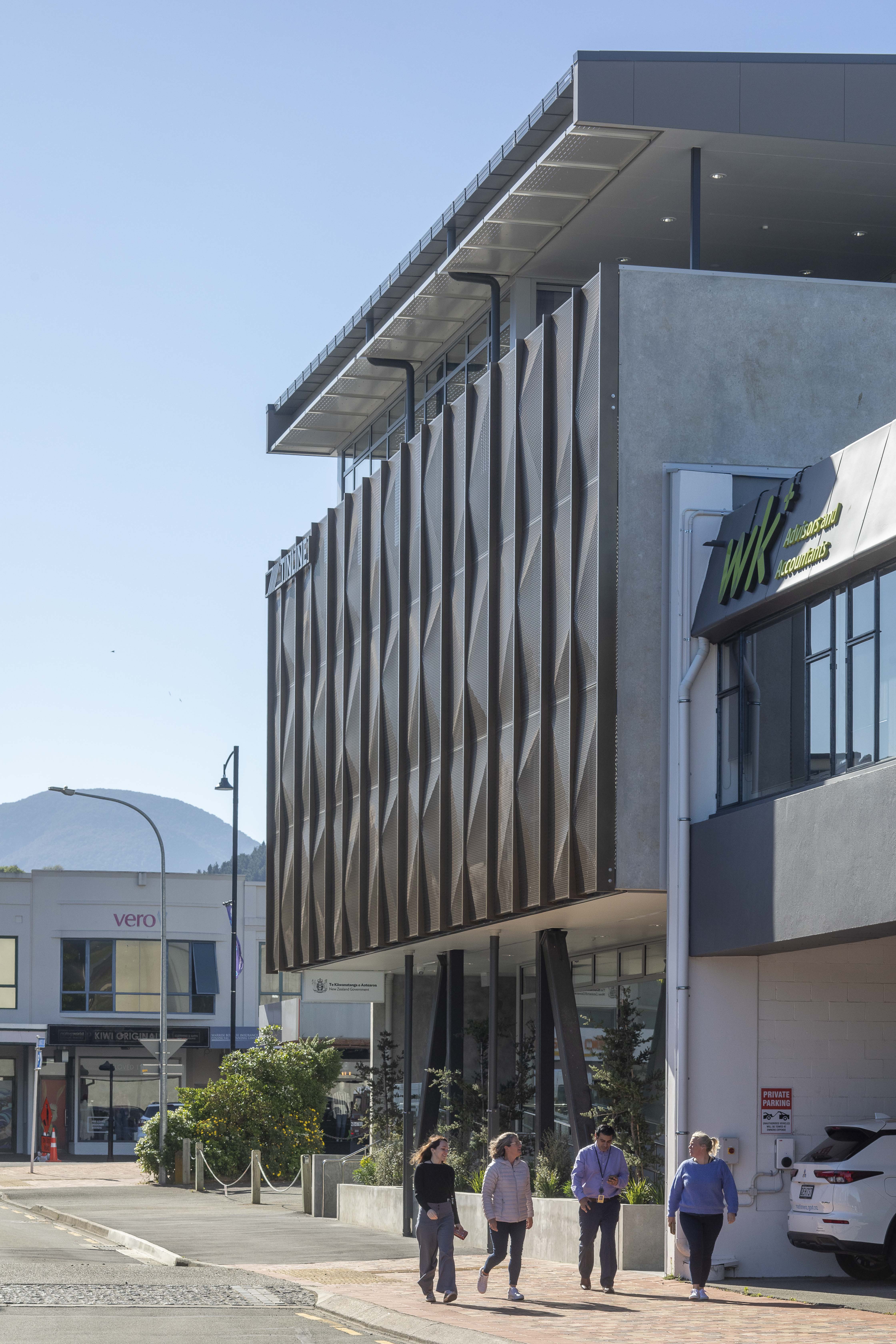
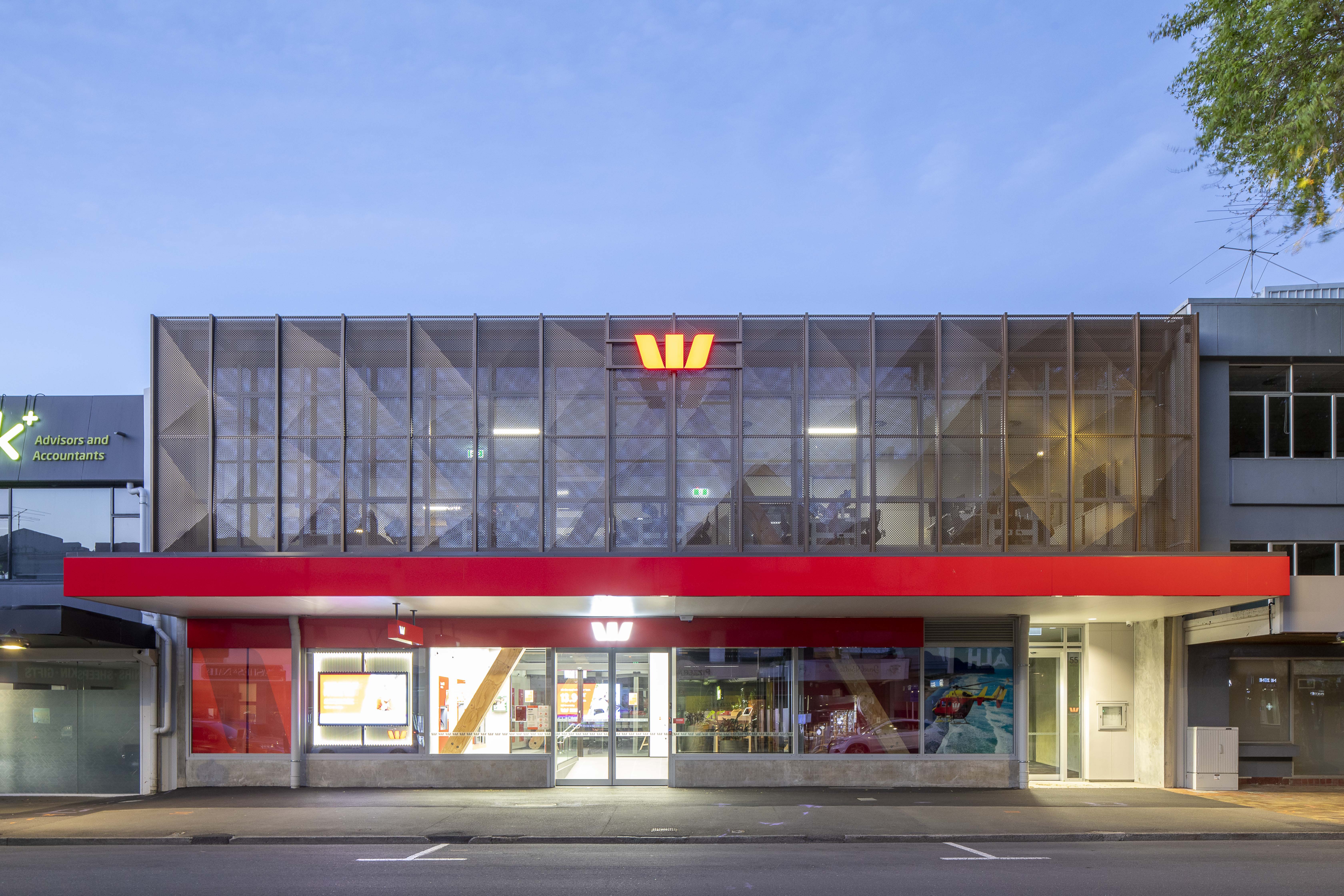
This building considers how we might increase the utilisation of timber in our construction industry by making more structural timber buildings on smaller, central sites (T-Shirts!).
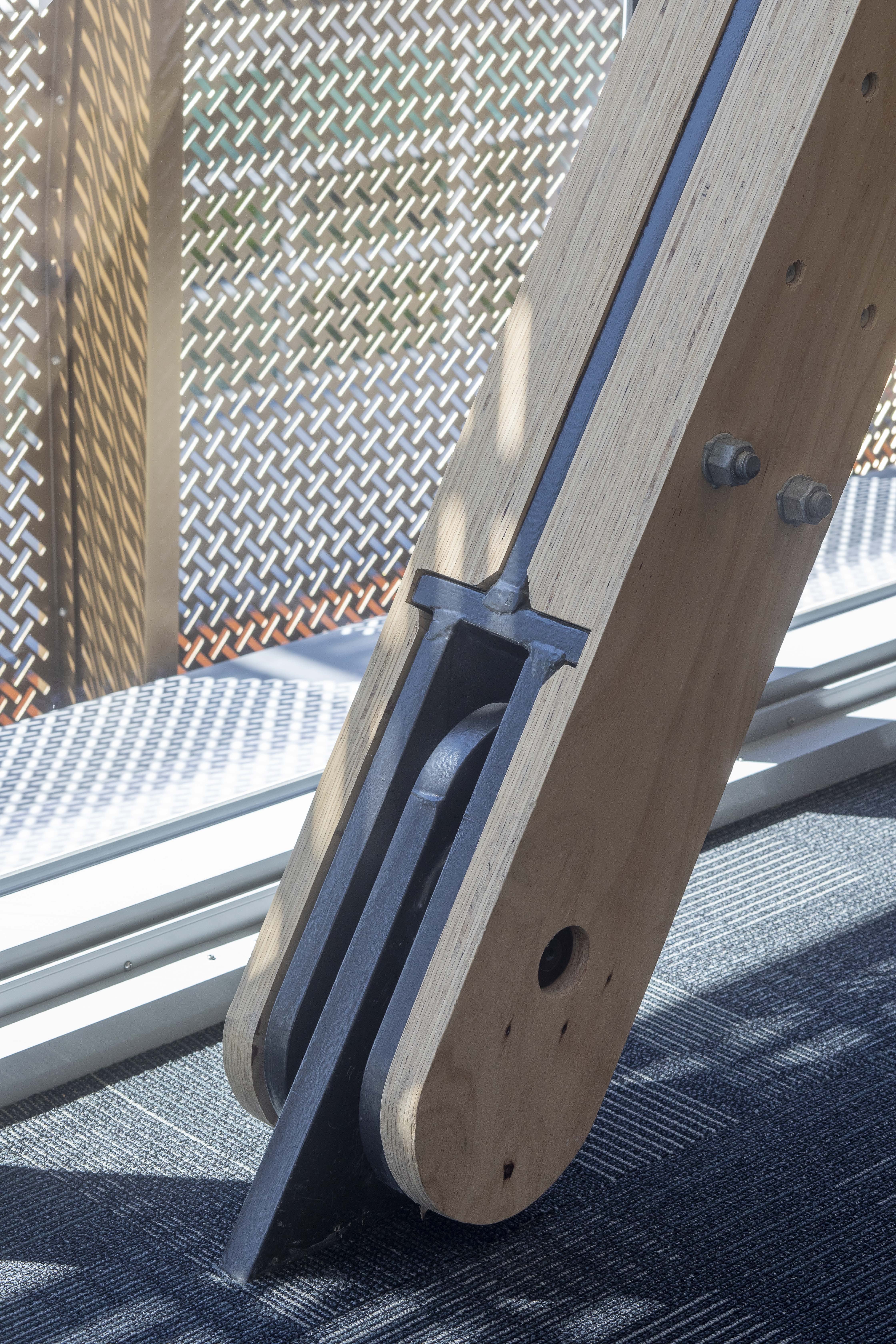
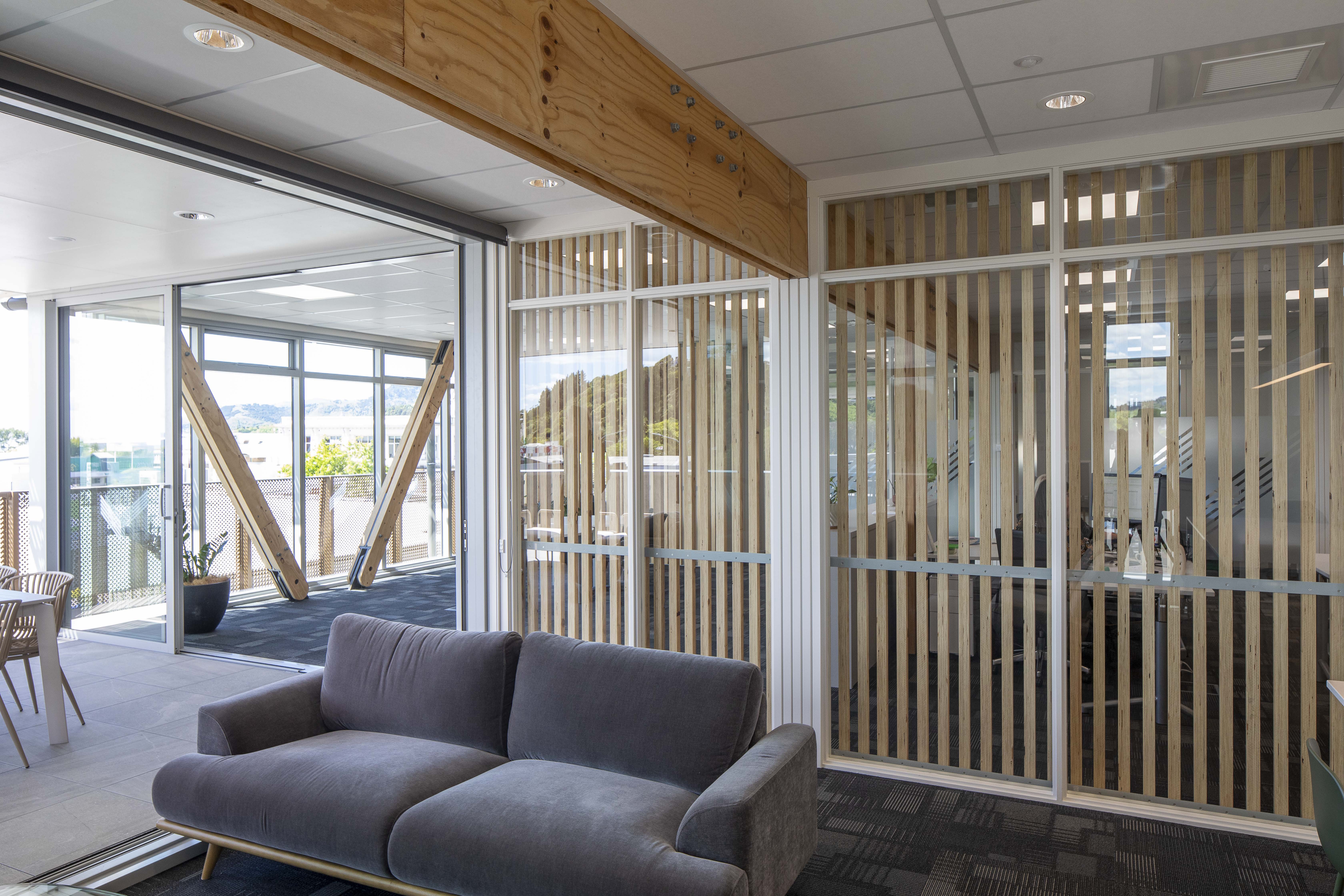
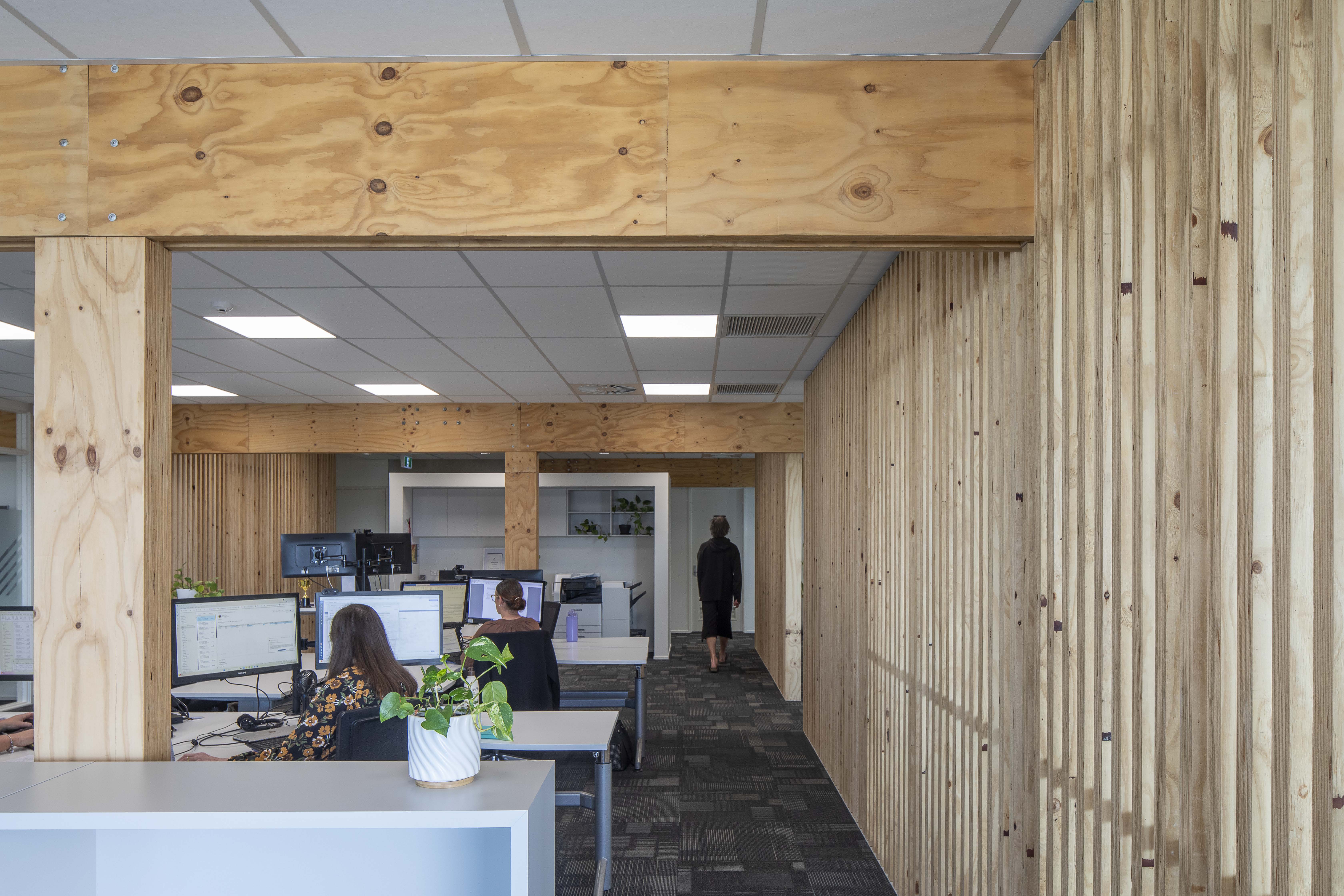
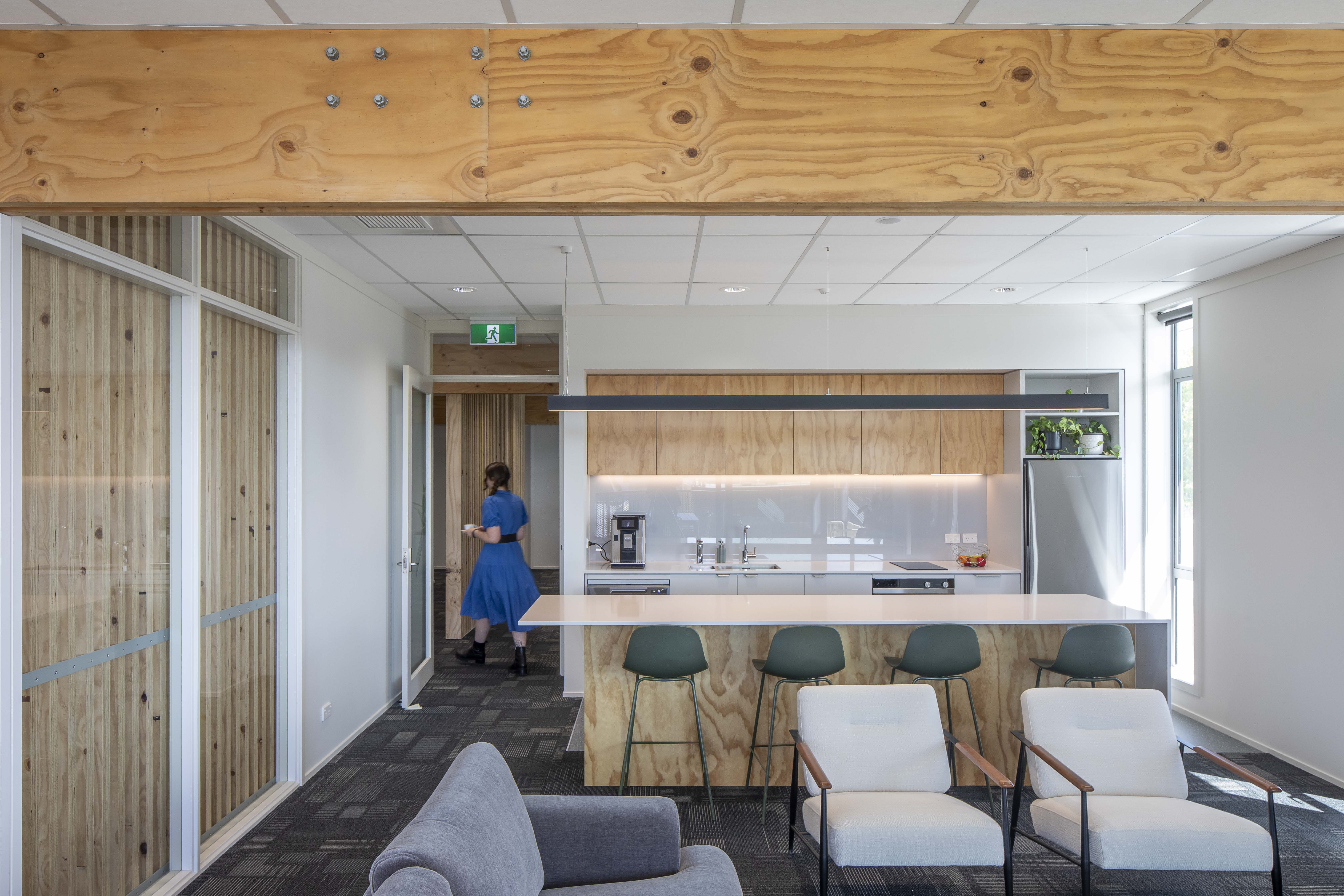
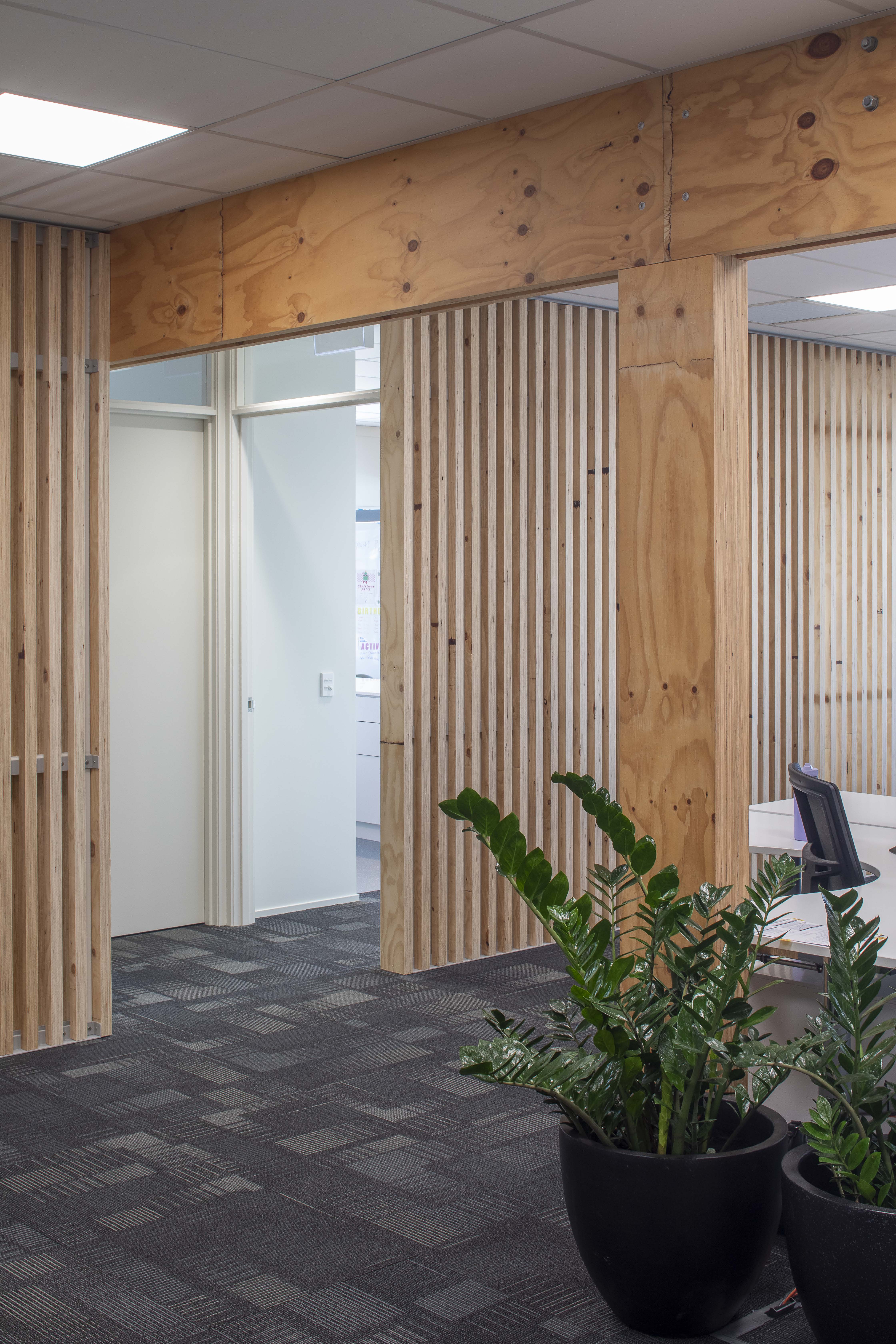
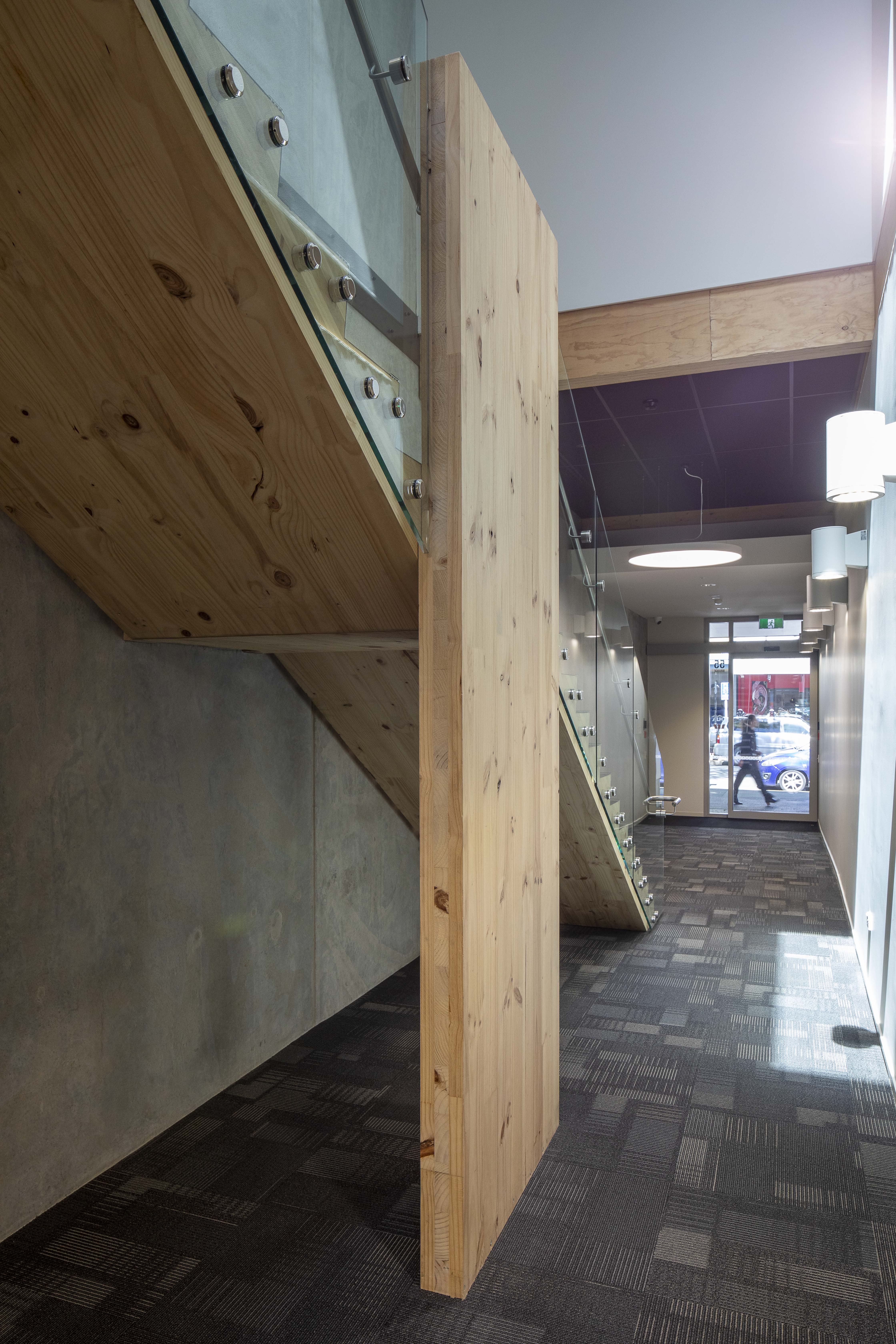
This Hybrid Concrete Timber design uses concrete foundation, slab, and perimeter walls to meet geotechnical, fire resistance and weather tightness requirements at the buildings edge. Structural Posts, Beams, Floors and Stairs use a combination of Laminated Veneer Lumber (LVL) and Cross Laminated Timber (CLT).
A single, flitched Timber / Steel Cross Brace at either end combines with a central concrete lift and services tower to brace the building laterally. With less concrete and steel, 1900m2 of commercial floor area has a reduced carbon footprint compared to a typical steel and concrete model in the order of 500,000kgCO2-eq or 250kgCO2eq/m2.
The carbon benefits are similar in scale to the SCION Timber Innovation Hub. However, there are of course, multiple small city sites for every campus or large site. And, of course, many more developers able to afford T-shirts than ball-dresses.


.jpg?w=320&h=200&fit=crop)


.JPG?w=320&h=200&fit=crop)


